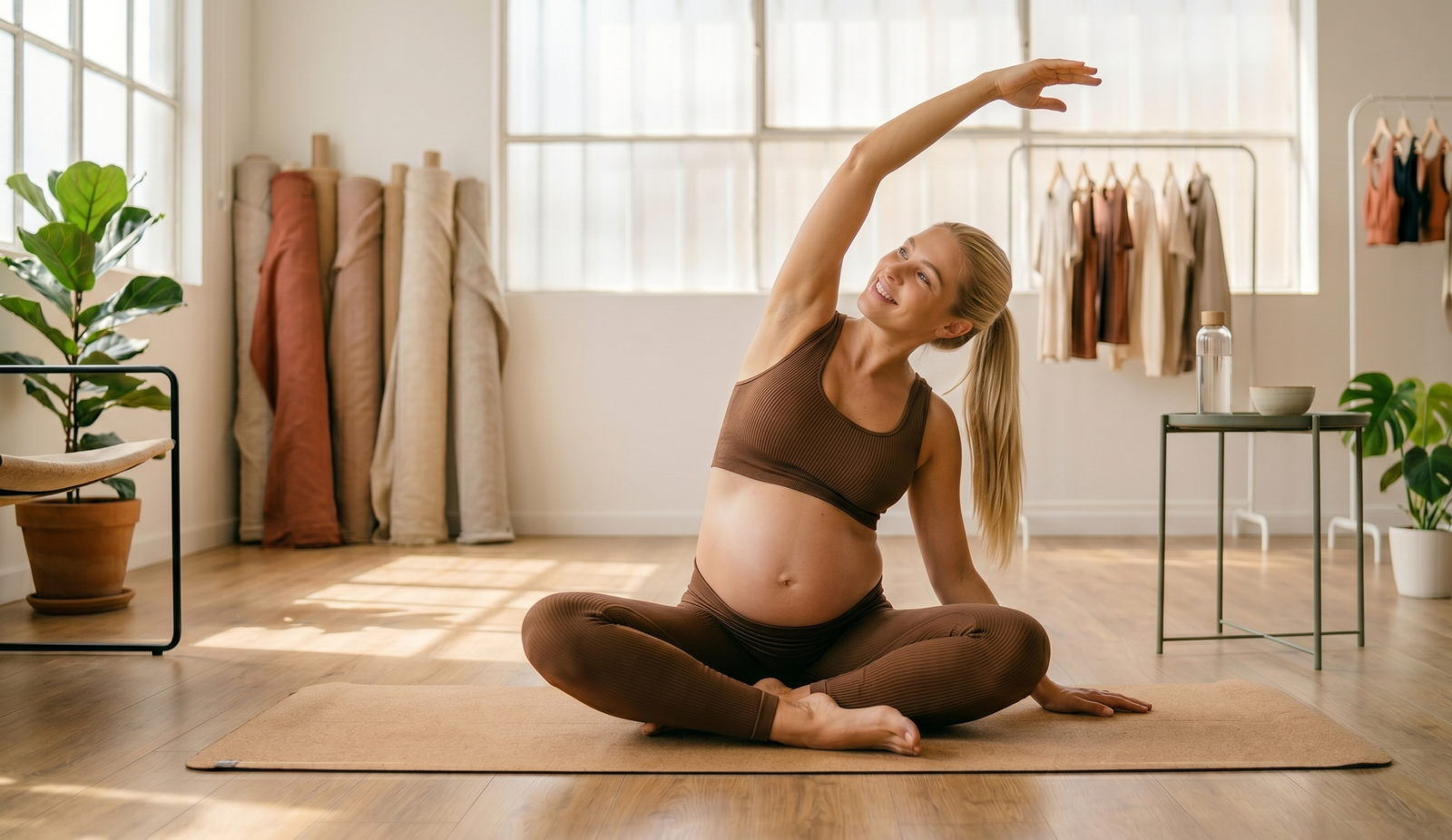
Eight weeks of prenatal Pilates reduced total labor duration by 31%, decreased active-phase pain intensity by up to 17%, and more than tripled the rate of women reporting complete satisfaction with their birth experience — all without a single adverse effect on mother or baby. These are the findings of a randomized controlled clinical trial of 110 first-time mothers published in BMC Pregnancy and Childbirth (Ghandali et al., 2021).
A 2024 systematic review and meta-analysis in the same journal, pooling data from multiple RCTs, confirmed the finding: Pilates during pregnancy plays a potential role in shortening labor duration (Haseli et al., 2024). And a 2025 meta-analysis evaluating Pilates specifically for vaginal delivery outcomes found consistent reductions in both pain intensity and labor duration.
For women preparing for birth, these aren’t abstract numbers — they represent the difference between a manageable experience and an overwhelming one. This article breaks down exactly what the trial found, why the Pilates method is uniquely suited to birth preparation, and how to build a practice that serves you when it matters most.

The Clinical Trial: What Happened When Pregnant Women Practised Pilates
The study, conducted at Ahvaz Jundishapur University of Medical Sciences, enrolled 110 primiparous (first-time) pregnant women and randomly divided them into two groups. The intervention group practised Pilates twice per week for 8 weeks, starting between weeks 26 and 28 of gestation. The control group received routine prenatal care without any structured exercise programme.
Each Pilates session lasted 35 minutes and included a 5-minute warm-up, 25 minutes of pregnancy-specific Pilates exercises (including pelvic floor work with resistance bands and exercise balls), and 5 minutes of relaxation and breathing techniques. Intensity was kept moderate, never exceeding 14 on the Borg Rating of Perceived Exertion scale.
The results were striking
Labor pain was significantly reduced. There was no difference in early labor (3 cm dilation), but from 6 cm onward — when labor intensifies — the Pilates group reported markedly lower pain scores. At 6 cm: 5.04 vs. 6.14 on the VAS pain scale (effect size d = 1.05). At 8 cm: 6.20 vs. 7.46 (d = 1.23 — a large effect). At full dilation: 7.44 vs. 8.51 (d = 1.07). These are clinically meaningful reductions during the most intense phase of labor.
Labor was substantially shorter. The active phase of labor lasted a median of 110 minutes in the Pilates group versus 164 minutes in the control group — a 33% reduction (P = 0.004). The second stage of labor (pushing) was 33.49 minutes versus 50.36 minutes — a 34% reduction (P = 0.043). Total labor duration averaged 170 minutes in the Pilates group compared to 248 minutes in the control group, representing a 31% overall reduction.
Maternal satisfaction was dramatically higher. In the Pilates group, 55.6% of women reported being “very satisfied” with their birth experience, compared to just 16.7% in the control group. Only 2.2% of the Pilates group was unsatisfied versus 14.3% of the control group (P < 0.001).
No adverse effects were observed. There was no significant difference in episiotomy rates, cesarean section rates, oxytocin use, or neonatal Apgar scores between the groups — confirming that the practice was safe for both mother and baby.
Why Pilates Works for Birth Preparation: The Three Mechanisms
The researchers identified three specific ways that Pilates prepares the body for labor, each targeting a different aspect of the birth process:
1. Pelvic floor strength and coordination
Modern Pilates incorporates pelvic floor muscle contraction exercises as a core component. Research has shown that regular pelvic floor training during pregnancy can prevent a prolonged second stage of labor in approximately one in eight women. But it’s not just about strength — it’s about coordination. During labor, you need to both contract and release your pelvic floor muscles at the right moments. Pilates trains this fine motor control through repeated, conscious engagement and relaxation cycles.
The second stage of labor — pushing — was reduced by 34% in the Pilates group. This is the direct result of a pelvic floor that is both stronger and more responsive.
2. Diaphragmatic breathing technique
The Pilates breathing technique — lateral thoracic breathing with controlled exhalation — serves a dual purpose during labor. First, it strengthens the diaphragm itself, which helps the uterine muscles function more efficiently during contractions. Second, it provides a learned pain management tool: women who practised Pilates breathing during pregnancy were able to work with their contractions rather than tensing against them, leading to less pain and more effective labor progression.
The study noted that women in the Pilates group used breathing and relaxation techniques they had learned during pregnancy sessions throughout their labor — and this directly contributed to their higher satisfaction scores.
3. Core and trunk stability
Labor is, in biomechanical terms, an event that requires the coordinated effort of the core musculature, the pelvic floor, and the respiratory system working together. Pilates is the only widely practised exercise method that trains all three of these systems simultaneously, in the precise patterns needed for effective labour — deep stabiliser activation, controlled breath, and progressive force generation through the trunk.
If you’re already practising Pilates, you’ll recognise this: it’s what you do in every session. You’re training for labor without necessarily knowing it.
For the broader science on Pilates safety and benefits during pregnancy, see our comprehensive guide.
The 8-Week Programme: What the Trial Used
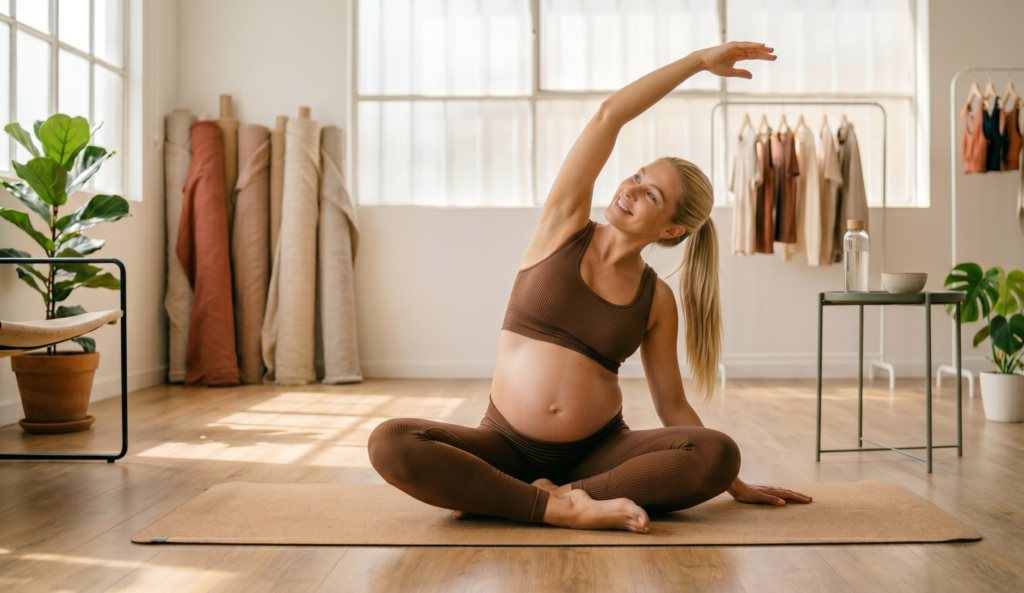
The clinical protocol was designed to be accessible for women with no prior Pilates experience and can be adapted for home practice:
Session structure (twice per week)
- Warm-up (5 min): Gentle mobility, breath awareness, body scan
- Pregnancy Pilates exercises (25 min): Core stability, pelvic floor engagement and release, hip mobility, spinal articulation — using exercise balls and fabric resistance bands
- Cool-down and relaxation (5 min): Guided relaxation techniques, diaphragmatic breathing practice, side-lying rest
Key exercise elements
- Pelvic floor contractions with 5–10 repetitions, practised intermittently throughout the session
- Exercises using birth balls for hip opening and pelvic mobility
- Resistance band work for gentle upper and lower body strengthening
- Diaphragmatic breathing integrated with every movement
- Imagery and visualisation techniques — a hallmark of Pilates that the researchers noted helps mothers prepare mentally for labor
Intensity guidelines
Exercise intensity was kept at or below 14 on the Borg RPE scale (described as “somewhat hard”). If any exercise felt too intense, it was replaced with a lighter alternative. After each session, participants rested on their left side for 30 minutes. This moderate, respectful approach to intensity is precisely what makes Pilates appropriate for pregnancy — it challenges without overwhelming.
Equipment for Prenatal Pilates at Home
The trial used minimal equipment. Here’s what you need to replicate the protocol at home, from The Serene Studio Guide:
- Stakt Foldable Yoga Mat — Extra cushioning for third-trimester floor work. Fold it for additional knee and hip support during side-lying exercises. The portable design means you can practice anywhere.
- Fabric Resistance Bands (Set of 3) — The study used fabric bands for gentle strengthening. Start with the lightest band and progress only if comfortable. These are specifically useful for hip abductor work that supports pelvic stability during late pregnancy.
- Exercise Ball (65 cm) — A core tool in the study’s protocol. Use for seated pelvic circles, hip opening, and gentle bouncing that relieves lower back pressure. Many women also use their birth ball during early labor — so it serves double duty.
What Pilates Did Not Change — and Why That’s Important
Scientific honesty requires acknowledging what the trial didn’t find. Pilates did not significantly reduce the rate of episiotomy (71.1% vs. 80.1%, P = 0.051 — nearly significant but not quite), cesarean section rates (11.8% vs. 19.2%, P = 0.296), oxytocin use (P = 0.160), or neonatal Apgar scores (both groups had excellent scores).
The researchers explain that episiotomy rates are influenced by multiple factors beyond exercise — including parity (first births have higher rates regardless), perineal length, and clinical decision-making protocols. Cesarean rates were already low in both groups because high-risk pregnancies were excluded from the study.
This nuance is important: Pilates powerfully improves the experience of labor — the pain, the duration, and the satisfaction — even when it doesn’t change every clinical outcome. For most women, how labor feels matters as much as how it measures.
The SereneSweat Perspective
Birth is the most physically demanding event most women will ever experience. And yet, much of traditional birth preparation focuses on what happens to you — the stages, the interventions, the contingencies — rather than what your body is capable of doing.
Pilates flips that script. It says: your body can be prepared. Your pelvic floor can be trained. Your breath can be a tool. Your deep muscles can learn to work with the process rather than against it. And the science confirms that when women invest eight weeks in this preparation, they experience measurably shorter, less painful, and more satisfying births.
This isn’t about controlling birth — it’s about entering it with the quiet strength that comes from knowing you’ve done the work. That is the most serene kind of preparation there is.
Frequently Asked Questions
When should I start prenatal Pilates to prepare for labor?
The clinical trial started at 26–28 weeks of gestation and practised for 8 weeks, showing significant results. However, other studies suggest starting as early as the 8th week of pregnancy for broader benefits. For labor-specific preparation, beginning in the late second trimester (around week 26) gives you enough time to build pelvic floor strength and breathing technique before delivery.
How much shorter can Pilates make labor?
In the clinical trial, total labor duration was 31% shorter in the Pilates group (170 minutes vs. 248 minutes). The active phase was 33% shorter and the pushing stage was 34% shorter. A 2024 systematic review and meta-analysis confirmed that Pilates during pregnancy has a potential role in shortening labor duration across multiple studies.
Does prenatal Pilates reduce labor pain?
Yes. The clinical trial found significant pain reduction during the active phase of labor (from 6 cm dilation onward), with large effect sizes (Cohen’s d of 1.05 to 1.23). The pain reduction is attributed to stronger pelvic floor muscles that work more efficiently and diaphragmatic breathing techniques that help women work with rather than against their contractions.
Is prenatal Pilates safe in the third trimester?
Yes, when practised at moderate intensity. The trial participants exercised from weeks 26–34 of pregnancy with no adverse effects on mothers or babies. All neonatal Apgar scores were in the healthy range. The key is keeping intensity at or below 14 on the Borg scale, modifying exercises as needed, and stopping if any discomfort occurs. Always get clearance from your healthcare provider before starting.
Can I do prenatal Pilates at home without an instructor?
The trial started with instructor-led sessions but transitioned to home practice under phone supervision due to COVID-19 — and the results remained significant. This suggests home practice is viable once you learn the foundational techniques. However, learning proper pelvic floor engagement and breathing technique from a qualified prenatal Pilates instructor first is recommended for safety and effectiveness.
Scientific Sources
- Ghandali, N.Y., Iravani, M., Habibi, A., & Cheraghian, B. (2021). The effectiveness of a Pilates exercise program during pregnancy on childbirth outcomes: a randomised controlled clinical trial. BMC Pregnancy and Childbirth, 21, 480. doi.org/10.1186/s12884-021-03922-2
- Haseli, A., Eghdampour, F., Zarei, H., Karimian, Z., & Rasoal, D. (2024). Optimizing labor duration with Pilates: evidence from a systematic review and meta-analysis of randomized controlled trials. BMC Pregnancy and Childbirth, 24(1), 573. doi.org/10.1186/s12884-024-06785-5
- Delgado, A., et al. (2025). Effects of Pilates training on vaginal delivery outcomes: a systematic review and meta-analysis. Brazilian Journal of Physical Therapy, 29(2), 101169.
- Sarpkaya Güder, D. (2018). Pregnancy Pilates and Benefits of Pregnancy Pilates during Childbirth. Journal of Yoga & Physiotherapy, 5(1), 555652.
- Davenport, M.H., et al. (2019). Impact of prenatal exercise on maternal harms, labour and delivery outcomes: a systematic review and meta-analysis. British Journal of Sports Medicine, 53(2), 99–107.
- Rodríguez-Díaz, L., et al. (2017). Effectiveness of a physical activity programme based on the Pilates method in pregnancy and labour. Enfermería Clínica, 27(5), 271–277.
- Salvesen, K.Å. & Mørkved, S. (2004). Randomised controlled trial of pelvic floor muscle training during pregnancy. BMJ, 329(7462), 378–380.
Disclaimer: This article is for informational and educational purposes only and does not constitute medical advice. Every pregnancy is different. Consult your obstetrician, midwife, or healthcare provider before starting any exercise programme during pregnancy. Women with high-risk pregnancies, pregnancy complications, or medical contraindications to exercise should receive individualised guidance. Pilates during pregnancy should be practised at moderate intensity under appropriate supervision.
Leave a Reply